
What Causes Orange Rust Stains on House Siding and Concrete?
Have you ever noticed rusty-orange streaks running down your siding, reddish-brown stains spreading across your driveway or crusty white buildup around your patio, you're not imagining things. And you're definitely not alone.
These are rust stains and hard water deposits. They're one of the most common exterior eyesores Mid-Michigan homeowners deal with and the worst part is they almost always get worse if you just ignore them!
What Are Those Stains, Exactly?
Rust stains are those orange, reddish-brown streaks and spots. They form when iron-containing metals or minerals react with water and oxygen, leaving behind iron deposits that bond to whatever surface they land on.
Where Do They Come From?
Most homeowners assume something is wrong with their house. But the stain source is almost always something right next to it. Here are the most common causes we see across the Lansing area.
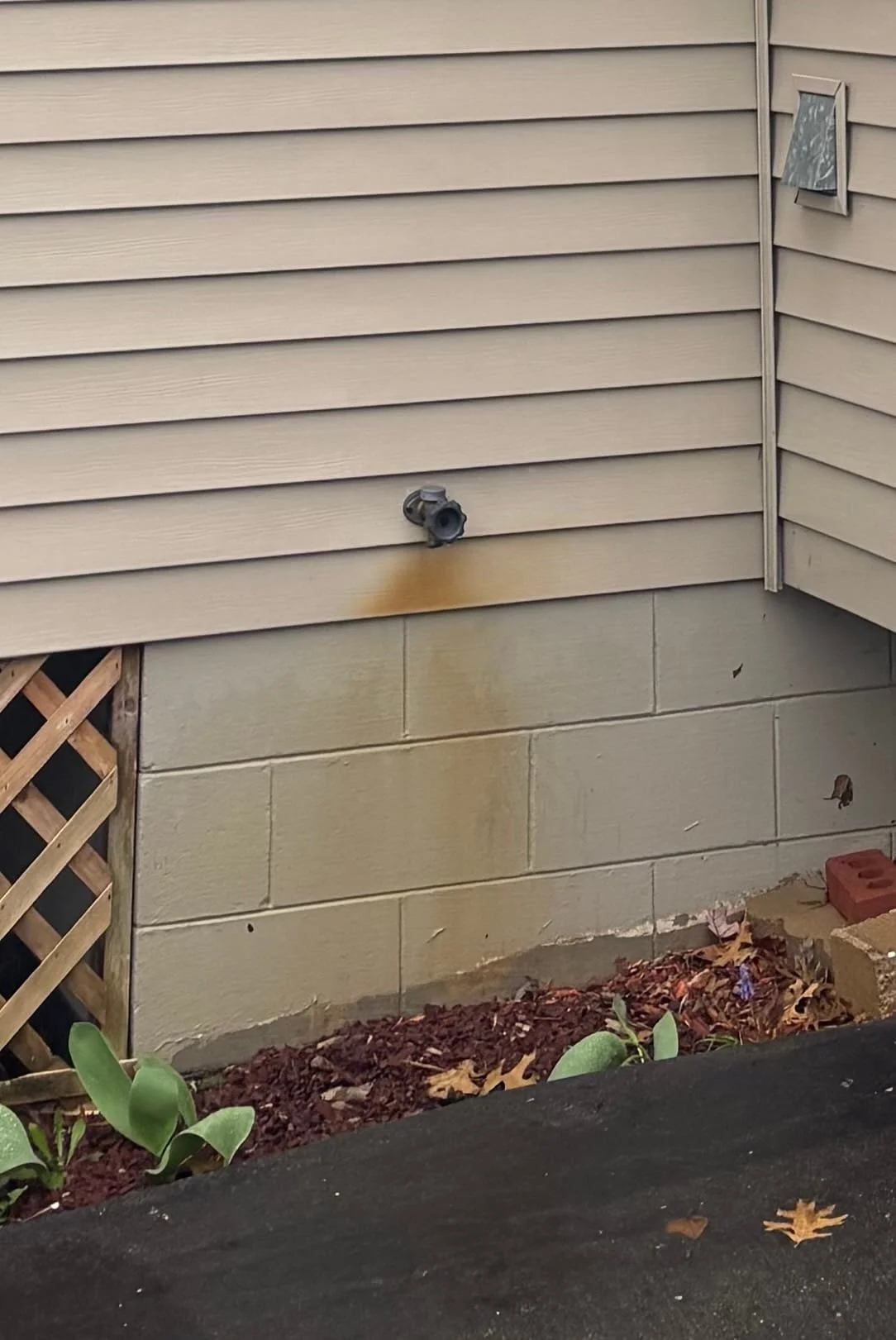
Irrigation and sprinkler systems. This is the #1 culprit by far. If your sprinklers are hitting your siding, foundation, or driveway, you're spraying mineral-rich (hard) water onto those surfaces multiple times a week. Over the course of a season, that adds up to hundreds of hours of mineral deposits baking into your home's exterior, We see this all the time! Perfectly maintained homes with ugly orange fans of discoloration right where the sprinkler heads reach.
Patio furniture, grills, and metal fixtures. Anywhere metal sits on concrete or near siding and gets wet, rust is forming. You move the furniture in the spring and suddenly there's a perfect rust outline of your chair legs stained into the patio.
Fertilizer and lawn chemicals.A lot of lawn fertilizers contain iron sulfate, which is great for greening up your grass but terrible for your concrete and siding when it gets where it shouldn't. Those reddish-brown speckles along your driveway edge or sidewalk? Probably fertilizer scatter.
Metal flashing, fasteners, and fixtures. Screws, nails, light fixtures, downspout brackets. Any exposed metal on your home's exterior can develop rust that streaks down the surface below it when it rains.
Well water with high iron content. This is common throughout Mid-Michigan. If your home runs on well water, even regular hose use near the house contributes to staining over time.
Why You Shouldn't Just Ignore Them
We get it. Stains don't seem like an emergency. But here's why letting them sit is a bad call.
They get harder to remove over time. Rust and mineral deposits bond with the surface. The longer they stay, the deeper they penetrate, especially on porous materials like concrete.
They damage the surface underneath. Hard water deposits etch into concrete and degrade paint or finish on siding. What starts as a cosmetic issue can become actual surface damage.
They kill your curb appeal. An otherwise beautiful home with orange streaks down the siding just doesn't look right. Neighbors notice. Guests notice. And if you're ever selling, buyers definitely notice.
Can You DIY This?
Some people try, and a lot of those attempts make things worse.
The biggest mistake is grabbing a pressure washer and blasting away at full power. High-pressure water on siding can force water behind the panels, damage paint, and crack vinyl in cold weather. On concrete, too much pressure in one spot etches lines into the concrete that look way worse than the original stain.
The second mistake is using the wrong chemical. Bleach doesn't do much for rust. And acidic cleaners that do work on rust can damage siding, kill landscaping, or discolor the surface if they're not handled correctly. We DO NOT recommend using CLR either as it usually causes an additional stain on concrete that’s quite hard to remove in itself.
This is really a job where technique and product knowledge matter just as much as the equipment. It usually involves targeted pre-treatment, correct dwell time, proper dilution, and a controlled rinse. Not just raw pressure.
How Lansing Precision Power-Wash Handles It
This is exactly the kind of work we do regularly across the Lansing, East Lansing, DeWitt, Okemos, and greater Mid-Michigan area.
Assessment first. We identify what the stain actually is, what surface it's on, and how long it's been there. A rust stain on concrete and a hard water deposit on vinyl siding require completely different products and techniques.
Targeted pre-treatment. We apply professional-grade solutions designed specifically for rust and mineral stain removal at the correct concentration and dwell time. The goal is breaking the bond without damaging the material underneath.
Soft washing for siding, pressure washing for hard surfaces. Your siding gets low-pressure water combined with the right cleaning solution. Concrete gets our industrial surface cleaning equipment for an even, thorough clean from corner to corner.
Property protection throughout. Our Total Property Protection guarantee comes standard. We cover plants, rinse landscaping, and shield outlets and fixtures so only the stain gets removed.
Preventing Future Stains
Once the stains are gone, a few simple adjustments can keep them from coming back.
Adjust your sprinklers. Walk your irrigation zones and make sure no heads are aimed at/hitting your siding, foundation, or driveway. Even a slight adjustment can eliminate the problem entirely.
Use pads or risers under metal furniture. Plastic or rubber feet under metal legs create a barrier between the metal and your concrete. No contact, no rust transfer.
Clean up fertilizer scatter immediately. Sweep or blow fertalizer off your driveway or sidewalk before the next rain dissolves iron into the surface.
Schedule regular exterior cleanings. An annual house wash and concrete cleaning prevents stains from building up and turning into a real problem. Routine maintenance that saves you from expensive fixes down the road.